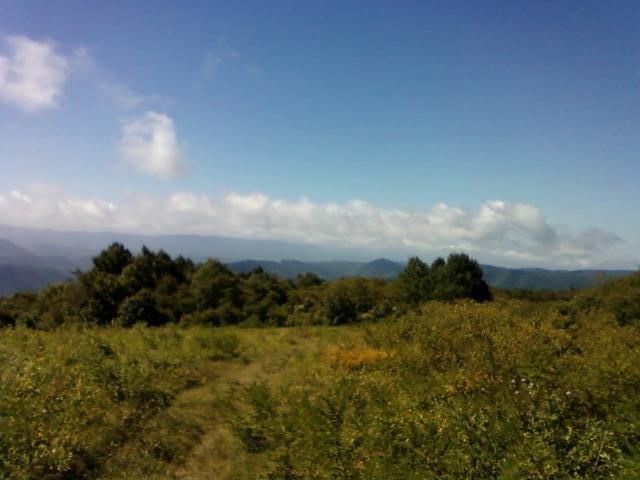
Saturday, April 28, 2012

Road trippin'

Since it has been a good while since my last article, I suppose it would be good to post something new so that the world knows that I have not died somewhere in the woods.
See, still alive.

 After a week long visit to friends at Southern Adventist University, I decided that the winter weather was quickly approaching so the original route of the trail of tears water route was probably no longer a viable option for two reasons. First being that it goes north west which would have taken me into the colder weather rather than away from it, and second reason being that I would be over the water during snow and cold rain. This probably would not have been a good situation for me. So I decided to reroute straight south and shoot for the gulf coast. I had never been to the gulf before so it would be a treat for me any way. The problem with this route is that there are no established trails, which means a lot of road walking. On my way through Georgia I was stopped by police twice for no reason and taken to the edge of their jurisdiction and told not to return. For the most part the route I took through Georgia was hot, flat, and boring. However, I noted on the map that there was a state park called Kolomoki mounds. Curious as to what it was, I decided to make that my goal for this state. After several days of walking and worrying that I would get picked up again just before arriving there, I finally made it to the park. Kolomoki is an interesting burial mounds park. It has several mounds on the property, including a massive temple mounds. The best of these mounds can be found inside the visitor center which was built over top of it. The mound belonged to a Chieftain and has been excavated and a board walk going around it for visitors to get a close look.
If you are in the Area, I would definitely advise you to stop by and take the tour, which costs a whopping three bucks. The museum inside the visitor center has a large collection of artifacts from the grounds including earthen pottery and statues. Unfortunately, the collection used to be bigger, but the place was robbed and a lot of the collection has been lost as a result.

After leaving Kolomoki I resumed my shot towards Florida. I started to notice the landscape and climate changes that were taking place around me as I went ever south. The changes started in the northern part of the state and became increasingly noticeable as I went further. It started with simple things like saw palmettos and hanging mosses and then came my very first live Armadillo sighting, and scorpions showing up at night.
Needless to say I was slightly more worried about finding the scorpions coming into my camp at night than I was the armadillos, though the dillos payed me several visits each night. Eventually I made it into Florida and saw the Gulf coast for the first time.

Wednesday, October 26, 2011

The Appalachian Trail

I know it has been a long time coming but in my defense a good library is harder to find then one might think in this modern times.  So with out further delay I would like to discuss the AT and all it's glory. I started out in Pearisburg Va. I was definitely shocked at how hard the first climb was. I ended up climbing up to around 3000 feet in the span of a mile and a half to two miles. At the top I was greated by a wonderful scenic spot called angel's rest.
From there I went on to see my first eight bears of the trail. They were all hanging around the area of the rest because there was a spring, blueberries, nut trees and several large bee hives in the area and there was little to no water else where. Some of the younger bears were inquisitive and one started to run up to me to check me out. I decided it was best to yell at it to run it off. Some people may be feeding these things like they do in the great smokey mountains. More on that later. I ended up walking another eight miles to the first shelter of the AT that I stayed in. Doc's Knob
These shelters are pretty nice though they tend to be over run with mice and sometimes even bats. The problem with Doc's Knob was that the nearby spring was dry. I ended up walking eight miles in high heat the next day before finding a blue blaze trail, which usually means water. Turns out it was just another trail that some idiot decided to mark with blue blazes. I walked it for around a mile before coming out on a dirt road with tire and horse tracks. Since I was feeling sick from heat and no water I decided to follow it down hill hoping it would lead to a stream or a town. Eventually a conservation officer drove up the road and gave me a lift to a gas station where I slammed a quart bottle of gateraid and bought two one liter bottles of water and a country time lemonaid. I got back onto the trail refreshed and ready to go. Only to find out that by getting off the trail I missed the next shelter and ended up walking another eight miles to jenny's knob shelter. So in my second day I made out with eighteen miles progress down the trail.
My first few weeks on the AT were definitely slow going since it is harder than the rail trails I had just come off of. The thing about the AT is that if it can go uphill, it will. The highest point I got to was at spruce knob which sits at 4429 feet. There is a really nice shelter there, but the nearby spring was bone dry. I attempted to dig a hole to fill with ground water but when I tried pumping it my water filter cartridge ruptured and spat out dirty water.
The place has a really nice view though. and even ginseng in the nearby areas.
So aside from having to boil water there was no problems in the past few weeks of travel. I stayed at spruce knob for two days. After that I decided it would be best to get off the trail and road walk to damascus VA where I could get a new filter. This way I could stop at stores for water when I needed it. I ended up stoping at three Mcdonalds a subway and some kind of stand called dipdogs, which makes an awesome banana milkshake, by the way. With all that super healthy food in my veins I had enough energy to walk thirty miles a day and made it to Damascus in only two days. I went to Sundog's outfitters for my new katadyn mini ceramic filter which was on sale 50% off since I'm walking after season. I stayed at the local church hostel and met a kid named Josh who I walked with for a good while before getting off the trail in TN.

Along the trail I was able to collect hickory nuts, butter nuts, walnuts and various other wild foods to save on money and add nutrition to my diet. Because all of these nuts were in the area it is also a good spot to see bears. These ones all seem to have a healthy fear of man so it's okay to walk quietly in hopes of seeing a few. If you are walking in the fall like I am try looking in the tree tops for them as they like to go up and eat the nuts up there. Do not worry though. No matter how quiet you are they will still notice you before you notice them in most cases and you will see them as they are coming down the trees to run away. I lost count at around 70 bears, most of which were on iron mountain.

As we progressed further south we started to meet northbounders that told us that the shelters in the smokeys were closed and you are not allowed to camp just any where. This was due to idiots feeding the bears which resulted in several people being stalked by them and even a few attacks. Do not be one of those idiots. You ruin it for every one else by feeding these animals. I decided to get off the trail in Hampton TN since the smokeys were basically closed. As a result I missied out on clingman's dome and several other big mountains. I did however stay at kincora hostel.


The one bad thing about this place is if you have cat allergies, you are going to feel it. They have several cats there. They do have a tree house out back but it only has one bed. The night I stayed there I got to meet the racoons that live under the cabin and come up at night to finish off the cat food left behind.


Some tips I would give for the trail and long distance hiking in general. Be inventive. There will be times when something will break or wear out and replacing it can become expensive. If you repair it with what ever else you might have around you save money and lots of it.
The snap on my knife sheath rusted and the button pulled free of the fabric so I used a buckle from the side of my army pants and a little bit of strapping cut to fit and made this little set up.
You can also make things from trash other idiots leave behind like this little hobo stove I made from a sterno can.

  It is very easy to make and does a good job of cooking food pretty quickly.

There are tons of wildlife along the trail provided people do not run it all off with stupid bells and whistles. Some of the easier ones to catch sight of are the slow moving small ones.


Since getting off the trail I have made my way south west to collegedale and stopped for a three week break along the way at Cherokee lake. I will discuss that and the adventures along the way in my next blog post.

Tuesday, August 30, 2011

Just what the heck is the allegheny trail?

That seems to be the question I'm faced with anytime I ask a local where to get onto it at, even if they have a yellow marker right in front of their storefront. It just seems that the Allegheny is not maintained, hardly marked and not well known at all. I started my trip on the Allegheny but ended up road walking and taking a few other trails to get south. In fact there was a time when the Allegheny just stopped on me in the middle of the woods and I was just left standing there thinking "Crap where do I go now?" Luckily I knew another trail was a few miles west of me so I hacked my way through rhododendrons and stumbled down treacherous mountains to finally reach it at one in the morning. The good trails I have been on so far would be the North Fork rail trail which runs 26 miles from Glady, WV to Durban WV. This trail is well maintained but during the week it is hardly used. In fact I did not see a single person on it the whole two days I was there. It passes through some pretty remote areas full of animals, wild fruits such as apples, blackberries, and elderberries.
 Watch out though because I walked up on a bear in the middle of a blackberry patch. The other trail I took was the Greenbriar river trail. This trail runs 79 miles from Cass, WV to Caldwell, WV. It to is a rail trail with a very easy one percent grade the whole way. You will see bears, deer, osprey, woodpeckers, and many more animals. One of the signs along the way claims that there are even bald eagles there, but I was not fortunate enough to see one. This trail offers two tunnels and a multitude of bridges. There are plenty of great swimming and fishing holes where you can catch small mouth bass, native brook trout and other good game fish.


From this trail I walked to Pearisburg, VA to join up with the Appalachian trail and that is where I stand now on this journey. I am currently resting at the Holy Family Church Hostel, which is run by the Catholic church here in Pearisburg for hikers and backpackers of the AT. It is a free Hostel, but they do accept donations in order to keep the Hostel running. I will be uploading pics as soon as I find a place which I can pop my SD card into.

For extra cash I have been keeping my eye out for some things I have discussed in previous posts, such as ginsing. I have so far found a few nice peices and a couple of smaller pieces which I sometimes use in tea made from sassifrass.
                                                       A nice piece I found along the trail.


Ginsing is predicted to hit 1000 dollars per dried pound this year so lets hope I find lots more like this one.
If you would like to see all of my trip pics so far feel free to add me on facebook at Franklin Radcliff.

Thursday, August 11, 2011

The Big Trip


I know I posted about this idea earlier, but after some planing I have the approximate route I want to take. This will be a grueling trek across the country in some of the most extreame environments and remote areas. I will start out on the allegheny trail and head east to the Appalachian trail. From there I plan to head south as far as chattanooga TN, and jump onto the trail of tears. This leg of the journey will cover a tragic trail taken by the Cherokee nation after their defeat by the US government. After some time I plan to go off trail towards Jefferson city and jump onto the Santa Fe National Historic trail. This leg covers the route settlers took to Santa Fe. After that I will jump onto the Continental divide trail for the first time. I will head south nearly to the border then road walk to the Juan Bautista De Anza National Historical trail. After som time I will get onto the Pacific Crest scenic trail and head all the way up to crater lake and other scenic areas in the north. I will follow the footsteps of lewis and clark until I hit the Continetal divide trail for the second time. This time I will follow it north to the Glacial national park. After some time exploring around there I will then follow the trail back south hitting most major national parks on or near the trail. This will include the grand canyon, mesa verde and many more unique and interesting sites. After that I will get back onto the Santa Fe historic trail until I reach another section of the Lewis and Clark trail and follow it back up north to the North country Scenic trail. I will then follow that back to West Virginia.

Along the way I expect to face many challenges and hazards. I will meet new people and get in touch with nature. Most importantly I will find out if i have what it takes to backpack America...

Friday, July 22, 2011

A long Journey

So a lot has been going on since my last post a few months ago. In my infinite wisdom, I had quit my job in order to move back to West Virginia to help some one who was in need. As it turns out she had lied to me in order to use me for food, shelter and money. So now I'm stuck in WV with no money and bouncing from job to job looking for something better. So I've been volunteering at a christian camp. It was here that I have decided to take a trip. This trip will be a long and dangerous road. My plan is to take the Appalachian trail south, then go west as far as California then back north east to the continental divide trail and up north as far as glacial national park and from there back east to West Virginia. The trip will probably take around two years and around 9-10,000 miles. I'll be stopping at several of the biggest national parks along the way as well as doing as much treasure hunting for extra cash as I can. I hope to stop off and update this blog with pics and such along the way. Wish me luck guys.   

Thursday, March 24, 2011

Outdoors adventures: Black water falls


Love to travel and see the sights? Well if you do and you love the outdoors then I would highly recommend a trip to the Black water Falls state park. The park has a beautiful falls skirted by a very well maintained board walk. The walk in is very easy since it is mostly down hill but the walk out is a slight challenge. It is not too hard for most visitors but some may find it difficult. The park offers camping and cabins as well as wifi access (we can't even live with out it in the woods these days) Information about accomodations can be found here.

For the more adventuresome fellows there is Hawks nest state park. This area has a lot of great rock climbing, challenging hiking, and white water rafting that is unmatched any where else. It's information can be found here. Hawks nest its self offers grand views of the gorge and surrounding mountains. it is also very close to the new river gorge bridge which is the site of a West Virginia tradition known as bridge day. Bridge day is a day long festival to celebrate one of the longest arch bridges in the world. Up to a few scant years ago it was the single longest bridge of it's kind. At this festival you can see base jumpers as well as bungie jumping. The highway becomes so congested with visitors that the road is simply closed down, so plan your travel accordingly. There is a pretty good blog about bridge day that can be found here.
So if you want to get out and see some exciting things that you won't be able to see any where else then I would suggest taking these trips into consideration!

Sunday, March 13, 2011

Treasure Hunting: May apple

In today's article I am going to discuss a plant that can be found in abundance through the months of April and May. That plant is commonly call May apple or American Mandrake. The roots of this plant can get up to six feet long and sell for around six dollars per dry pound. It does not take many of the big roots to make a ten pound bundle and they grow in very large patches. The fruit is edible in small amounts, the rest is toxic. The chemicals in the plant are being used for cancer research because they stop cell division. It is also used topically for genital warts It can be found through out the mountains of the American north east and can be sold at any place that buys any other wild plant mentioned in previous articles. More information on the plant can be found here. It never ceases to amaze me at the many uses of plants we have right around us. The power of nature can save lives and better our understanding of disease. A very good example of this would be the plantain family (not the type of banana) What I am referring to is a very common weed likely to be found in your front yard at any given time. The narrow leaved plantain has a long stemmed seed bunch that as children we would use to wipe each other for laughs.   
Though I don't know of a market where you can sell this plant, it offers a readily available herb for controling cholesterol and even diabetes. So next time you're out weeding your front lawn keep in mind just what it is you are throwing out as garbage. More info on the plantago family can be found here. As for may apple the uses are much more significant. since it is used in cancer research you are not only making a few dollars but potentially saving lives at the same time.


The tools you will need to collect this root are as follows: a large sack, something to dig with, and a large rack outside in a sunny place for drying. Once you have collected a large enough amount to satisfy yourself, wash the roots and then put them out to dry. Make sure of the weather over the next few days and make sure they do not catch moisture or else they will mold and you will have to thoroughly scrub them and restart the drying process. I would suggest either putting plastic over them at night or moving them into a dry garage to prevent them from getting dew on them. Once dry bundle them up and haul them in. It should not be hard to collect a hundred pounds of this plant or more. Chances are you have even seen it growing next to the road and never gave it a second thought. Now that you know of the importance of this plant I would suggest taking advantage of it in the short time it is available in the year. 

Tuesday, March 8, 2011

Treasure Hunting: Diamonds

I'm sure many of you have enjoyed the show "cash and Treasures" as I have. One of the locations that they visited was the only open to public diamond mine in the world. I'm speaking of course about the crater of diamonds state park near Murfreesboro, Arkansas. Here you will find a big chance of finding your very own diamonds. There have been several very large ones that have come from this park. While I was there a small black diamond was even found. I started out in my usual manner by getting to know all the old timers that work the site regularly. I do this because they can show just what to look for while digging. You also get a chance at making new and interesting friends. One of the guys I met had payed off his house with his finds there over the course of ten years. There are many people who do nothing but dig there every day because they were laid off from their jobs. That much work put into the prospect leads to a lot of knowledge about diamond mining.

There are a few different ways you can go about hunting. You can pick a sunny day and just walk around looking on the surface and hope there is something all the other diggers missed. I would wait until just after they've tilled the soil over for this method.

You can also dry screen for diamonds. The diamonds will come out of the dirt clean due to the nature of their structure. Dirt just does not stick to them well.

The final method is to screen in water. There are several places through out the park where you can do this and there are a few different types of screens you can use. The screens below are the ones I have. The round one is called a Saruca, which is what is commonly used in Africa. The other ones are a pair of boxed screens with varying mesh sizes to as to filter gravel. I got my screens from a gift shop at the nearby campgrounds that I was staying at. But they could easily be made at home for just a few pennies. I don't care to pay a little extra if it means I'm supporting a tourist industry.

The materiel you are going to dig in is a kimberlite deposit left behind by an extinct volcano. The kimberlite has since broken down to resemble a pale green clay. Throughout this material there are diamonds scattered, but the highest concentration is in a dark sticky black clay. The old timers at the park say that during rains, diamonds will wash into this sticky clay and become stuck. I have witnessed them tossing the green kimberlite aside as they dig down to the darker stuff.

 Saruca

The method to use each type is slightly different.  The Saruca is generally concave in shape so that the heavier diamonds settle to the center during the sifting process. When you place the material into the saruca you hold it just under the water and shake it up and down while slightly turning the screen in your hands. The circular motion will insure that all the heavy materials move towards the center if the screen. When you're done and all the clay is cleaned out with only gravel remaining. Find a clean flat spot and in a smooth quick motion flip the saruca upside down onto what ever surface. Do not do it from too high above the surface because you don't want all your stuff to fall out every where. You just want to lay it out on the table. The reason for this is because the diamonds are at the very bottom in the center. Once you flip it over they're on top and will show up once the gravel dries out.
Box screens

These screens are a little more straight forward in their use. The basic method is to dump the material into the top screen with the bigger mesh. Break up all the clay and dirt so that it falls through to the smaller meshed screen. Once all the gravel in the top screen is clean set it aside while you work on the smaller screen. By this time it should be somewhat dry enough to pick through.

What to look for.

A diamond in the rough looks like a smooth translucent rock. It has no specific shape like many other gemstones and so it can be any thing. You can look into them but cannot see through them and they feel waxy to the touch. If you find something you think may be a diamond take it to the main building and they will identify it. I have heard, however, that if you find something big the park services will watch where you go back to dig and then call their families to come and claim that spot and force you out, so hold onto your finds until you're ready to leave. For this reason a lot of the fulltimers there never report diamonds that they find. so there are a lot more going out of the park than the park states. Don't let any one else claim a spot you worked hard to find.

While you're in the area you can stay at one of the hotels in town or if you go past the park from Murfreesboro about a half mile down the road you will find a pay-to-camp campground. The rates there are fairly reasonable and they offer free wifi, a shower room, a gift shop as well as a large collection of rocks for sale. I would definitely check it out. Before heading out though, check the weather. When I went they had the biggest rain storm in 20 years which lasted for five whole days. So unfortunately I never found anything, but there is always next time.

Saturday, March 5, 2011

Outdoor Living aka Survival: Hazards

God forbid you ever find yourself lost or stranded in the wild some where. In the last article on survival I discussed tools one would need to survive in the wild. In this article I will be discussing a few things which makes a survival situation... well a situation. There are many hazards in the wild, be it animals, poisonous plants, parasites, or just the terrain.

 Plants can cause a great many problems, whether it be a bout of sickness after mistaking it for something edible or a severe rash. Some plants to avoid that are relatively common are as follows:
 Poison Ivy
Pictured in center, this plant has three leaves and grows on a vine. It can creep along the ground or grow up trees. Especially old plants will even form it's own thick branches that hang out from the tree trunk. It produces a cluster of white berries and the leaves are green to a redish orange. Depending on the severity of your allergy to the plant, it can cause a irritating rash to severe swelling that requires steroids. It's relative, poison oak, also has three leaves, but they are shaped very similar to oak leaves. 
Poison Sumac
This is a small shrub or tree that can get up to twenty feet tall with a thin trunk. It is considered to be far worse than poison ivy or poison oak. wiki entry

If you come into contact with these plants it is possible to avoid the rash if you wash it right away. (with in 1 hour) It is even better if you have rubbing alcohol on hand and use it to wipe the area of contact. This will destroy the oils and prevent a rash from occurring. It is the method I have used for years, while working at summer camps infested with the stuff.

There is a whole host of plants that are toxic and even deadly if eaten. Some of them even resemble edible plants. There is, however, an edibility test that you can perform. This test is mention in the military survival guide I noted in a previous article. After about eight hours with out eating take the part of a plant you want to eat and place it on the inside of your elbow and fold your arm up and hold it in there for around twenty minutes. If there is no rash, swelling or blisters, the next step is to hold it between your lips (not in your mouth) for ten minutes. If there are no issues, go one to prepare the item in the way you plan to eat it and then hold it in your mouth for around five minutes. (small quantity) If nothing happens then go ahead and swallow the small bit and wait thirty minutes. If after all of this there are no feelings of sickness, then the plant is probably safe. Start out eating small quantities. You won't starve to death in a day so it won't hurt to only eat a small bit of it that day. The next day if it is all right then you can eat more of it.

Aside from plants that are a danger there are also many animals that can harm you. The most notable would be snakes. Every one is concerned about them when they enter the forest. Did you know that the copperhead is by far more aggressive than the rattle snake? It's true, rattle snakes will give you a warning telling you to gtfo. A copper head will strike with out warning and repeatedly. They have even been known to give chase for a few feet. Their venom is not as bad as the rattler, but they're aggressive tendency makes them a bigger hazard. There are several species of snake that mimic the color patterns of venomous snakes in order to scare off potential predators. For instance the corn snake looks almost identical to the copper head. 
  Corn snake

Copper head

 They look a lot alike, right? Well there is a way to tell the difference. That way is by the shape of their heads. Poisonous snakes all have venom glands at the backs of their heads (except for a few exceptions) those glands give the head a very distinct shape. 


 One can generally tell at a quick glance if it is poisonous or not, but if in doubt get the heck out. There is no point in compounding the problems of being stuck in the woods by adding a bite on top of it.  There are many other animals to worry about in the wild but they tend to be more visible and therefor a lot less scary. No one likes the idea of something jumping at them from the leaves on the ground. I recommend walking with a stick, just in case. The stick will help make traveling easier any way since it is a third point of support on the ground as you walk. And it makes a good snake bashing tool, should you come across any creepy crawlies. 
Many bigger animals can be kept at bay with a few simple steps. First step is to not leave food around your camp. Bears can smell it from miles away so hang that stuff in a tree, you'll need it it to make survival easier. Fire will keep a lot of animals away. (not necessarily bears in areas actively camped) Make shift shelters do even more to keep them out. Try building one against a rock and make a barricade of timber around you. 
Water is perhaps the most essential thing for life. It is also the biggest hazard in our lives. This is mostly our own fault. There are so many bacterial colonies in even the most pristine of wild waters that there is really no safe place to take a drink these days. The best way to clean it up is to boil it, but that isn't always an option and if you really have to drink then there are still a few things to make it somewhat safer.


How stuff works borrowed this from the US Army Survival Manual: FM 21-76
This is a very easy to make filtration system. The charcoal is the most important part, as just like in many store bought charcoal filters, it will neutralize a lot of stuff. How stuff works has stolen the whole article on obtaining water from the survival guide. You can find it here. (I find it amusing that they slapped a copyright symbol on pictures they took straight from the book and then just added color too) 
In later articles I will go over how to build shelters and traps as well as tools and weapons.

Thursday, March 3, 2011

Outdoors adventure: Cranberry Glades


With the recent warm weather I have been getting the urge to get outdoors and do some hiking, as I'm sure many of you are. For those who like to get out and see something spectacular whilst they walk, I have just the place for you. The Cranberry Glades area near Richwood, West Virginia has a very unique environment. There is the remnants of a tundra from the ice age right in the heart of West Virginia. This area has a big looped board walk going through the park. You can see a lot of wildlife such as Venus flytraps and honey dews. On a sunny day in the glades in spring the air is usually cool but not exactly cold. The walk through here is a very easy walk. The boardwalk is not at an incline.


For a more strenuous workout try the nearby Falls of hills creek.
This is a set of three waterfalls. The picture above is of the lower falls. The walk in is down hill and at the bottom there is a small board walk to stand on and rest. You can enjoy not only the falls but wildlife is rather abundant. Spotting a few white tail deer on the way in is not uncommon. If you are in the area in the spring don't forget to catch the Ramp festival. You might just pay for the whole trip!

If you need lodging in the area you can try the four seasons lodge in Richwood. Located just behind the hotel you will find a small waterfall with a very good swimming hole. four seasons

For a more natural hike, you can visit the highland scenic highway which is just down the road from the glades.
This area has breathtaking views and all natural paths. There are trails going all through the national forest, many of which are perfect for the hardcore backpacker. There is plenty of camping in the area, free of charge. The draw back to this area is that it is closed down until later in the spring due to the high elevation. There is so much snow that the road is impassable. Here you can see black bears, deer, panthers, bobcats and many other kinds of wild life. If you visit in the early fall you will be treated to a view of the leaves changing in the mountains around you. The national forest in this area is so vast that there is no way you could cover it all in a life time, so there will always be something new to see on a return trip.

At the end of your trip you can visit the Cranberry mountain nature center. Here you can pick up a lot of souvenirs as well as see the little museum they have there. So weather you are a rugged outdoorsman  or just a casual stroller, there is something here for you. A visit here will leave you with nothing but good memories as well as stories to tell your family and friends.

Tuesday, March 1, 2011

Outdoors adventures: Seneca Rock

For those who do not want to take the time to go treasure hunting but would rather go out and sight see, I would highly suggest paying a visit to Seneca Rocks, West Virginia. Weather it is a day hike to the top, extreme rock climbing, or just a leisurely walk around the base while taking pictures. Seneca rocks has it all. The hike to the top will greet you with a breath taking view of the surrounding valley and along the way you will get a good dose of nature. As some one who has taken the walk to the top, countless times I can attest to the natural beauty of the area. There are wild blueberries growing along the trails and a good deal of wild life in the area. The rock climbing difficulty of this formation is not something that one can see in the east. The hike to the top is a bit strenuous so I recommend a slow pace to the top. Take your time and enjoy the scenery along the way.


Nearby smokehole caverns offers adventure of a more subterranean variety. The cavern offers beautiful rock formations to see in a guided tour. The cave has a board walk going through and the difficulty is rather minor. This place has been developed with family tours in mind. If memory serves me the gift store sells "dirt" for kids to screen for gem in a small flume outside. This is just semi-precious stones that are sold in the store, but it can be fun for kids to play in the dirt and "treasure hunt"

The nearby streams offer excellent fishing and there are extensive hiking trails through the surrounding mountains. There is something for every one of every age, so next time you find yourself thinking of where to take the family for a vacation, consider wild and wonderful West Virginia.

Saturday, February 26, 2011

Treasure Hunting: Moss

A very easy forest item that can be found nearly every where is none other than moss. Did you know it can be sold? It sure can, you can sell it wet or dry. Moss is used to enhance the water retention abilities of soil as well as many other uses in the garden. In World War I, Sphagnum mosses were used as first-aid dressings on soldiers' wounds, as these mosses are highly absorbent and have mild antibacterial properties. (wikipedia) If you sell wet then the buyers tend to rip you off pretty hard core because they will demand that the 50 gallon bags that they supply you with are so full that they can't even be tied shut, and they'll only give five dollars per bag. The real money in moss lies in drying it before selling. I remember in my youth our yard was practically spider webbed with bailing twine lines where my step father used to hang his moss to dry. By the end of the summer the grass was replaced with bits of dried moss that trickled down over time. Once the moss was dry we would take bailing twine and drape it inside a box. Stuff in the dried moss, and then tie the twine and pull out a perfect bail of moss. We would then haul it all in and my step father would have earned a good bit of money from it all. We didn't have a whole lot of money back then so it helped to put food on the table. It sells by the pound and prices vary depending on where you are. Many of the places that buy other wild plants will also buy moss so just ask around for the best prices.

Buyers tend to only want moss taken from logs even though the stuff growing on rocks look the same. They like log moss because the dried bits of wood clinging to it weighs a lot less than dried bits of rock. 

I used this as a good money maker when I was just 17 years old. At that time I was in the national guards and still living at home so I had no real bills to pay. I used the money I made to keep gas in my car to run around with. Though at that time $1.06 was maddeningly high for regular unleaded, so I usually just sold it wet. I owned an old Nissan Maxima, which I drove around and mistreated just like I do my Grand Am. Since I had no truck I couldn't haul a lot of moss. I could fit five bags in the trunk, three or four in the back seat and two in the front passenger seat. which would net me around 50 dollars back then and would fill my tank up like 5 times. Now-a-days we can no longer do that and i can no longer recommend wasting  moss by selling it wet. In the past, through out West Virginia, it was fairly common to see trucks loaded town with bags and bags of moss. While this was a good income for a lot of poor families. The over cultivation has taken a toll on the moss population. Now you are required to have a permit to collect it on public lands. I do not believe the permit is a lot more than 15 dollars.

This is a fairly easy hunt and all you really need is maybe a pair of gloves in case there are some thorns mixed in and a lot of big canvas bags, which buyers will happily provide for free most of the time. The moss can be found in cool damp forests with a lot of old growth and fallen trees. Any one who has ever walked through the woods at some point should have some idea of where they could find this natural treasure.

Friday, February 25, 2011

Treasure Hunting: Getting started and ghost towns

It's my firm belief that many people out there would love nothing more than to get into treasure hunting of some kind or another. The only thing they have holding them back is the lack of understanding they have for the past time. Many people probably think that they have to go to some far off place in search of treasures, but the reality is it can be done rather close to home. You may not be able to dig gold or diamonds specifically, but nearly every state has some sort of precious gem or mineral, and every state has some sort of history that would have left behind relics that could be worth some money.

When I was still in high school I used to watch the show "Gold Fever" on the outdoor channel. (The only show worth watching on there really) I became fascinated by the fact that they pretty much spent their time playing in the woods or the desert finding gold and such. Once I got a little older and entered college I actually joined the GPAA. Membership in the GPAA comes with a lot of perks. They give you your first gold pan, a video showing how to pan, and most importantly a catalog. This catalog is like a guide book showing what valuables can be found in each state as well as giving rumors, stories, and legends about lost treasures in certain areas. In the back there are listings of places you can purchase a lot of gear from as well. I have found this book indispensable in my hobby. The sheer amount of loot that could be found in each state was very surprising. While I have never ordered any of the equipment from the back I have made extensive use of the main book and many of it's pages are marked up with notes and calculations and such.

Even if you don't go and join up with a club, you can still find a lot of info around your home town in the pubic records. A good suggestion for starters would be to get a metal detector and find where an old town or settlement used to be. This is one of the first things I started with as a teenager. In West Virginia there are a lot of old sites where there used to be coal mining towns. These towns were a sort of legal slave labor camp. The companies owned everything right down to the general store and they paid in scrip, which was a kind of currency that could only be used in that town. In this way they made sure that the miners were completely dependent and deeply in debt to the company. The conditions in these towns were often brutal and any type of rebellion was often met with a massacre by the local "law enforcement" which were pretty much just hired goons paid to keep the miners from unionizing. Eventually this led to a group of 10,000 coal miners marching across the state to drive out the detectives hired by the companies. The miners were eventually defeated by state and federal troops and the region stayed non union until 1933. Battle of Blair Mountain.


Today there is not much left of these old mining towns, but with some luck and a good metal detector you can find some old scrip as well as many other artifacts that could be worth a few dollars or better. This is an easy and very relaxing method of treasure hunting and can be done at your leisure. There is no real need for lots of digging and strenuous work. Heck you can even take the time for a picnic.
  An example of miners scrip

Thursday, February 24, 2011

Black Panther Hunt


In my native area there are a few mountains that are said to be haunted. Many times at night you can hear the screams of women coming from deep with in the mountain forests. This is not from some aberration, but from wild cats, panthers to be exact. 40 years ago it was pretty common to see a black panther coming up into peoples back yards and stealing chickens and such, but in more modern times you do not see them any more. That is because they have retreated deeper into the forests. The logging industry in West Virginia has a rather disgusting habit of completely stripping the land, bull dozing up the stumps and leaving a tangled mess of roots and broken limbs that nothing can get through. They also do not replant trees. They get away with it because they are based out of state so they simply don't pay the fines and in 80 years when there is finally a little growth to replace it they come back and do it all over again. Needless to say I hate the logging industry. (coal mining and natural gas too) It is because of this destructive behavior that we lose so many natural treasures. According to the West Virginia DNR the black panther is extinct in our area, but many people say they have seen them today whilst out on their four-wheelers. They have even been spotted in the nearby scenic highway area. Why would the DNR make this claim when so many people have spotted the animals? It's pretty clear if you think about it. If an animal thought to be extinct suddenly reappeared then the logging industry would not be able to strip the land as they do. So to protect their source of income they "persuade" the DNR to say there is nothing out there.

One spring break I decided I wanted to go out and try to find definitive proof that they were out there and so I set out to one of these nearby haunted mountains. After about 3 days of hiking back into the mountains i had started to find tracks and scat (fecal droppings) but it started to rain one evening so I set up camp for the night. As I was sitting in my tent I could hear the cries of wild cats. They were close. I had hoped to set out the next morning to find where they had been. Late in the night I felt something weighing down on my chest. I awoke to find it was my tent, which had collapsed due to the rain turning into snow and building up on the top. Unfortunately my college sucks in that it always takes its spring break like two or three weeks earlier than other colleges, to keep kids from going to the big spring break bashes. While it keeps kids out of trouble, it also means we usually get snowed in for spring break unless we were smart enough to dip out as soon as our last class was over.

I had to get up a few more times that night to knock the snow off my tent and the next morning I beat feet out of the mountains. I gathered up everything that offered warmth and water and left the rest so that I could get out as quickly as possible. There was around two feet of fresh snow from that night and it was still white out conditions during the day. Luckily I had planned for cold weather and was wearing polypropylene long under wear and sweater which I had kept when I left the guards. I also had cans of Sterno cooking fuel and my heavy goose down sleeping bag. I really had no problems with the cold. My real problem was water. Since I was moving fast I was sweating a lot and I had to drink a lot of water. There were a few times when I had to stop and melt snow to get more water, but thanks to the Sterno that was no problem. With the help of my GPS and my good health I made the three day hike back in about nine hours. Granted the trip in I was in no real hurry so I had only traveled about fifteen miles and I took a more direct route out.

After the spring time had really set in I went back with my brother to try and get the gear I ditched, but some one had been through and took it. We did walk up on a bear on the way in, though. That was a pretty cool thing to see. I have only ever walked up on maybe five bears in the wild in my time out there.

One day I may return and get the proof that those wild cats are still out there but for now they are still "extinct."

Tuesday, February 22, 2011

Outdoor Living aka Survival: tools

After talking with my boss about my week end adventure I noticed not every one would know what to do in case they were lost or stuck out in the middle of no where. She went as far as to say she would have died if it were her. Having grown up in the middle of no where, playing in the woods and camping on my own since the age of 13 I am very comfortable in the woods. I also have done a lot of studying and practicing of various survival techniques. My back ground in survival ranges from lots and lots of books to military training to simple trial and error. How ever, not every one has this same skill set as I have and I at times forget that some things I think of as rather elementary, some people would never think of. This is no one's fault, really. Some people have spent most of their lives in suburban areas and have never set foot in real woods other than nearby parks with out much real wildlife present. There are some "naturalist" type people who like to get out of the city and go hiking and stuff, many people refer to them as "hippies" or other such names. While they may be comfortable in the woods, I suspect that they really have no experience with real survival situations.

So I feel it may be necessary to at least get a few readers at least a rudimentary understanding of survival tips and techniques before they get the gold fever and get lost out in the woods some where. I realize that there is so much out there to learn about survival and much of it depends on the type of terrain one is stuck in, that there is no way to cover it all in this blog. Heck, there is still a LOT I do not know myself. The best source of any knowledge is books. The written word is the most powerful tool or weapon on earth. With it and a little practice the difference between dieing in the wild and making it out becomes immensely more favorable for you. I have stated in previous articles that I read about wild edible plants almost fanatically (see: Treasure hunting: Ramps) but there are just so many of them and they vary depending on where you are and there are a lot of look-alikes that are even toxic so I probably won't get into them.

This article will be mainly about tools that would increase your chances of survival.

Perhaps the most important thing you could put in your pocket before going out into the woods would be a pocket knife. Remember that movie "Castaway" with Tom Hanks in which he was wrecked on an uninhabited island? He held onto a single package the whole time, only to find out once he got off the island it had all kinds of stuff including a pocket knife. My point here is that if he had made use of that stuff he would have had a much easier time on the island.

A knife can be used to defend yourself, to produce tools, to clean food, to make rope and so on and so on. The simple fact is, you would have to be crazy to set foot into the wilderness with out one. I have a small pocket knife that I carry in places I know there are not many dangerous animals and my larger K-bar from my time in the military for places where there may be wolves, coyotes, or even bears. (granted a gun would be more suitable for bears)

The second most important thing to bring with you is matches. Fire can and will save your life in the wild. It scares off a lot of animals, it sterilizes water and kills bacteria and parasites in food, it keeps you warm and dry and provides light. While a lighter is good, matches are better. A lighter can break in a fall or the flint can get wet, but matches stores in a water tight container, which can be bought for just a few cents, will be usable no mater how bad of a tumble you take down a hill or what have you.

When building a fire there are many things to consider. Depending on those things there are many different fire set-ups to choose from. Here is a list of different types of fires that can be built. I will note that the star fire listed there is for places where there is not an abundance of burnable wood.

A sleeping bag is another good thing to have with you. When selecting a bag you should never take the big rectangle ones as there is a lot more space in them that has to be heated up in order to keep you warm. Because of this they lose heat more quickly than a mummy bag and are pretty much useless in situations where you need it for survival, unless you're lucky enough to have some one hot enough to share the bag with. ;) The rest of us however will need to stick with the mummy bags. Always get bags filled with wool. goose down or synthetic materials. Absolutely NEVER buy cotton. The porous nature of cotton causes it to retain water and hold it against your skin This will actually wick away the heat and make you colder and possibly kill you. Have you ever been sitting around the house and wondering why your feet are still cold even though you have socks on? It's because those socks are probably made of cotton. Take them off and your feet will actually stay warmer with out them.  The best fabric to get is wool, since it will keep you warm even if it gets wet. It may be a bit heavier to carry in, but it is worth the extra exercise.

With these items and a little knowledge you will gain a distinct advantage in the wild, but like I said before reading is the most powerful tool you can have. Some reading material you should look into.
US Army Survival Manual: FM 21-76
Edible Wild Plants: A North American Field Guide
The Trapper's Bible: Traps, Snares & Pathguards

I will be covering some of the material in these books in later articles but it never hurts to have the book yourself for reference.

Treasure hunting: Rubies and sapphire

Did you know that the ruby is actually just a color spectrum of sapphire? What I mean by this is that all rubies are sapphires. They are just a certain spread of colors from orangish pink to the red pigeon blood rubies. Any where that sapphires can be found you have a chance at finding rubies as well. The best place to go in search of these gems is in the state of North Carolina. Some readers may have watched the show on the Travel Chanel called "Cash and Treasures." What you may not know is that not every thing is as it seems at many of the places she went. In the episode where she was emerald hunting in NC she visited a "pay to dig" mine and found several awesome specimens worth thousands.

The scam:
Say you own a piece of property near an area you know has some type of gem or mineral worth money. You did and dig but nothing is ever found on your property. Seems you just aren't lucky enough to be sitting on what is called the "pay streak."  A pay streak is the line where you can find the deposits of what ever mineral it is you are looking for. These are formed by ancient rivers, volcanoes and other such things that leave behind a treasure after they have receded. Now that you know you can't make any money from your land what can you do? Well lots of people start a pay to dig mine in which they sucker tourists to actually pay to dig there. What they do is go to a lapidary or some other source and get "junk gems" which are just gems with fractures or inclusions or something that just makes them worthless. They then "salt" the mine and turn the dirt over and wait for the sucker or tourist to find the gems. After some time of this they may actually buy a few really nice gems to put in the ground and when they get found they make a big deal about it. Take pictures of the happy finder and tell other patrons about the find for years to come in hopes of stirring up a frenzy. While it may not bother some people that this goes on and the fun does actually lay in the experience, I think that finding out later that my gems are just trash would be kind of a disappointment. You have about as much of a chance striking it rich buying a lottery ticket. But the tops of this page isn't entitled "Treasure hunting: Scratch offs." Not all pay to dig mines do this but there are a great deal who do. An old room mate of mine visited the emerald mine depicted in the cash and treasures episode while on a field trip with a college organization he was in at the time and he had found where they had been salting. He had said that they took the host of the show right where she could find emeralds. I'm sure that episode drew in a lot of new suck... er I mean customers.

Another way to scam tourists is that some actual mines dig the dirt for you. They make it seem like they're making the experience easy for you and all you have to do is clean the dirt right off your new treasure. The problem is that with a little knowledge and time working the land you will get a sense of right where the most gems are found. These people avoid those areas like the plague when they are digging your dirt. You are simply there to supplement the income of an actual mine that may (or may not) be having a hard time. They don't want to just give away all their big gems, so they'll dig your dirt elsewhere on the property while they save that pay streak for themselves. This scam isn't quite as bad as salting but they are still robbing you of a chance to get something really good.

Once in a while though you will find a pay to dig site that does neither of these things. One such mine is the Mason ruby and sapphire mine in Franklin NC. I went there for a spring break a few years ago to try my luck. I could tell that they do not salt because as I dug down into the payload bearing material I could see a definite layer of minerals and other deposits in the ground. While there is never a guarantee that you will strike it rich they do say that there is rarely any one to go home empty handed. As in my usual fashion I asked as many questions of the people working there as I could think of in order to gain a working knowledge of how to find sapphires. All the basic tools are already provided for you and they will even pick through your screen to see if you have any sapphires. After a few days of this I no longer needed them to look for me and I was even helping other customers. They jokingly told me that if I was there any longer they'd have to hire me. You should bring with you a hat that shades your face neck and ears though. I learned the hard way after getting sunburn blisters on the back of my ears that standing over the flume for a few days with no protection is not a wise idea.

The price per day is only 30 dollars and with a lot of hard work and some luck you may make that money back. At the end of my spring break I walked out with over 150 karats of sapphire and when I got home and cleaned them off I found that two of them were small pink rubies. My biggest sapphires are between 5 and 6 1/2 karats. I would have had a 15 karat sapphire but some bum started watching me and followed me to my hole and dug a bucket after me finding it. Now I fill my holes back in every time i leave them. (no sense in some one else profiting from my hard work)

The mine has it's own website here. and is open nearly year around. I would highly suggest stopping by the ruby city gem museum and looking around. They can also cut and set any gems you may find. Their link is here.

      My haul after a week of digging. I certainly didn't strike it rich, but I believe that if I were to get them cut and set in jewelry I'd make the money I spent on the trip back.

Sunday, February 20, 2011

Treasure Hunting: Blunders

It happens to every one from time to time. We go through what we think is a well laid out plan for a trip or project, only to find that we missed something very important. With this kind of hobby I require a lot of traveling to get to many of these places and this means that there is always a possibility of me getting lost trying to find  a good place to prospect. Much of the time these roads are way out in wilderness areas. Once such time i was traveling around Georgia in search of some good gold bearing land to prospect on, when I happened upon a National forest area. I decided to give it a shot and see what kind of place it was and if there were any spots to start panning around from. As I went further into the national forest it became a wilderness area, which means a lot less travel and upkeep on the roads. Now at this point I should mention that I tend to be very stubborn. The road I was on narrowed considerably. On the passenger side was a drop off of a cliff. On the drivers side was a sheer rock wall, with no room to turn around between the two. Was it wise to start on a road like this? Probably not, especially since I'm driving a 2000 pontiac grand am. But I did it any way. Pretty soon the road started getting very rough with very large rocks jutting out of the road and random places. As I slowly went down the road every once in a while those rocks would bang up against the under carriage of my car and the briers growing along the edge of the rock face would scrape down the side of my car, but I kept going for about 5 miles like this. Eventually the road went around to the other side of the mountain and there was a slight wide spot to stop at. At this point I decide to stop and get out. I needed to see which way was the best way to get out because I knew by that time I had screwed up. So I started walking down the road I had not yet been over. As I went along I kicked out as many of the big rock in the road as I could and threw them over the hill. Along the way I found part of the road was washed out and had a trench in it that was at the very least three feet deep. So i took as many of the big rocks that I could find and put them in the trench for when I came through later in my car. Further down the road i found that there was a water fall that actually came down onto it. The part of the road closer to the downhill side was weakened by erosion quite visibly but I decided that it would be okay to actually drive under the water fall. All in all it was about a four mile walk and it seemed the safer way out, and I found some camp sites at the end so I would have a place to rest since it may take the rest of the day to get the car out. When I came up to the trench in my car I actually had to approach it at an angle and only two of my tires were touching the ground at once going over it, but i made it. The water fall was even easier as all it seemed to do was was all the dust off my car for me. When I finally got out to the other side there was a sign waiting for me. "High clearance 4-wheel drive vehicles only" This sign wasn't on the other end of the road or I would not have taken a grand am through it. But hey, I took a grand am some place many people would be afraid to take a truck. Me 1 Bad Roads 0

Now you would think that I would have learned from that past experience, but again I'm very stubborn, so no I did not learn anything. My case in point. This week end I went to visit my father in West Virginia. I stopped along the way and bought a bottle of Smirnoff vanilla vodka and Pepsi so I could make some Vanilla Pepsies and get drink with my father. Whilst we were drinking he informed me of a spot that he had heard about from the DNR where I could possibly locate some gold. I decided that the next day I would set out to try my luck. And set out I did. All he had was the street name and the town it was near. So I punched that into my Tomtom and set out. Upon arriving I noticed what appeared to be snow on the road. Again stubborn me I decided "screw it, I'm going!" and started down. Did I get out and check first? Nope. Did I ask a local about the condition of the road? Nope. Very quickly I found out that the snow was not snow at all, rather it was five inches of solid ice that was smooth as glass. Since the road was a down hill slope, there was no stopping. Even dropping it into lower gears I was still accelerating because I was just sliding down the ice. The rear end of my grand am started to kick out a bit which is when I started to freak out a bit. Luckily the ice was only in the center of the road and once tired touched dry dirt I was able to avoid going over the bank. Not knowing how far the road runs or how far it was like this I decided it would be prudent to turn around and GTFO. So once I got to the bottom of the hill I some how managed to turn around and start back up the hill. I knew I needed a good running start at it because as soon as I slow down or stop I would not be able to start again on that ice.
 I got enough of a running start to get a good way up the hill, but eventually my forward momentum petered out and I came to a stop. To top it off the spot i stopped at had a spring draining into the side with no ice. So I had to dig out a small hammer from my trunk and start busting ice and tossing it over the hill. As I did so I was reminded of that time in Georgia and how both times I had that flash of a thought stating "Hey this is a bad idea" But as in the former case I did it any way. I ended up busting around 400 yards worth of ice and getting with in 300 to 400 yards from where I started before is started to get dark. So I did the only thing I could do and walked out in search of a phone to let my father I wouldn't be making it home tonight. After returning to my car I decided to build a fire. I rummaged through my things and found a small lighter, some purel hand sanitizer, some kabob stick which I had intended to use as sucker sticks but never did, a few empty medicine boxes, and a rag. With this stuff in hand I went out and got as much dry wood as I could find and set up a fire right on the ice in front of my car. I soaked the rag with the purel and put paper on it and the kabob sticks on it all, then built my fire base around it with the wood I had found and lite it all up. It burn very well for sitting on 5 inches of ice. By the end of all my wood there was a good pile of hot coals which I scattered over the ice to melt a bit more of it before turning in for what would be a very cold and not very restful night. The next morning I was awoken by the sound of a four wheeler coming down the road to check up on me. With a lot of luck we were able to get my car out with no damage. This time around the bad roads beat me. In the end I found out that, that road isn't even the one I was supposed to be on, so thanks tomtom for guiding down the wrong path, I'll be switching to garman very soon.

So what did I learn from all of this? While I would like to say "Check the road you're traveling" I think we all know that eventually I'll repeat this same mistake again. Albeit probably not on an ice road. I did learn how ever that I should always keep a sleeping bag with me in case I end up stuck in the car over night. Fire starting tools are nice to have as well.

So if you want to travel to new and unknown places for treasure hunting you should make sure you have a good idea what roads to take before hand and be prepared if you get lost or stuck.